




Appointments
Request Appointment/Request Exam - After completing the respective forms, these requests will be processed by our services, and you will receive confirmation by email. The indications about the Agreements (Insurance/Subsystem) are merely informative, please request confirmation in the "Observations" field.
Schedule Appointment/Exam myHPA - By accessing myHPA Saúde you can make the appointment in real time, directly on the Doctor's schedule according to his availability.
You can also contact us at +351 282 420 400 Algarve | +351 269 630 370 Alentejo | +351 291 003 300 Madeira
Phone booking/service hours:
Monday to Friday: 8:00 AM to 7:00 PM, Saturday: 8:00 AM to 5:00 PM Sunday and Holidays: Closed
(National landline)
Your request has been successfully received. We will confirm your appointment shortly.
Download myHPA Saúde:


Oesophagitis
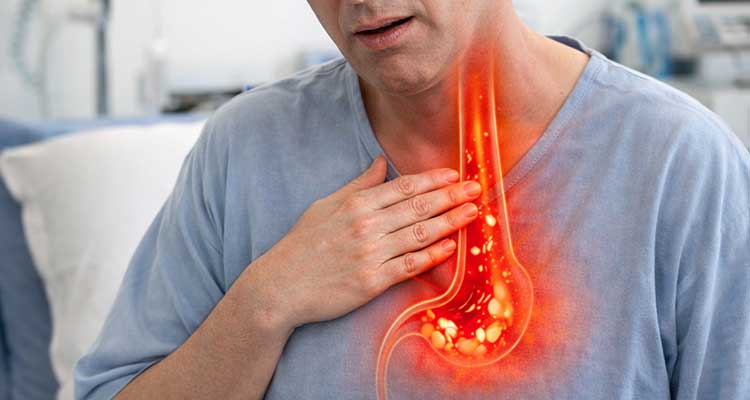
Oesophagitis is inflammation of the oesophagus, the tube that connects the throat to the stomach. It may cause pain, difficulty swallowing, reflux symptoms or chest pain. Inflammation occurs when the immune system reacts to infections, allergies, injury or erosive substances such as gastric acid or certain medications. Chronic acid reflux is one of the most common causes, although other less common types exist.
The most frequent types include:
- Reflux oesophagitis: caused by dysfunction of the lower oesophageal sphincter, allowing stomach acid to reflux; a hiatus hernia may worsen symptoms.
- Eosinophilic oesophagitis: associated with allergies, characterised by the accumulation of eosinophils in the oesophagus; more common in young individuals with a history of asthma or atopy.
- Lymphocytic oesophagitis: characterised by increased lymphocytes in the oesophageal lining; rarely associated with reflux or eosinophilic oesophagitis.
- Medication-induced oesophagitis: occurs when tablets remain in prolonged contact with the oesophagus.
- Infectious oesophagitis: caused by bacteria, viruses or fungi; more common in immunocompromised individuals, with Candida albicans being the most frequent cause.
Oesophagitis commonly presents with painful or difficult swallowing, retrosternal pain, heartburn and acid regurgitation. In young children, it may manifest as feeding difficulties, irritability, back arching or poor appetite, and may affect growth.
If left untreated, oesophagitis may lead to oesophageal narrowing, mucosal rupture due to severe vomiting or Barrett’s oesophagus, which increases the risk of oesophageal cancer. Long-term inflammation may also result in tumour development.
Diagnosis is made by a gastroenterologist based on clinical history and complementary investigations such as endoscopy, biopsy and barium swallow radiography. These tests allow assessment of structural changes and identification of the underlying cause.
Treatment depends on the cause. In reflux oesophagitis, antacids, H2 receptor blockers or proton pump inhibitors (such as omeprazole) may be used. In refractory cases, minimally invasive endoscopic techniques are now available, such as ARMA or endoscopic fundoplication, and surgery (surgical fundoplication) is another option.
Eosinophilic oesophagitis is managed with topical corticosteroids, proton pump inhibitors and elimination diets excluding allergens such as wheat or milk. Medication-induced oesophagitis requires adjustment or substitution of the offending drug, while infectious oesophagitis is treated with specific antimicrobial therapy. The overall goal is symptom relief, prevention of complications and treatment of the underlying cause, ensuring a favourable prognosis in most cases.
- Dra. Ana Margarida Vieira
- Dr. André Sancho Ramos
- Dr. Bruno Peixe
- Dra. Helena Tavares de Sousa
- Dra. Maria Margarida Sampaio
- Dra. Patrícia Queirós
- Dra. Ana Rita Herculano
- Dr. André Sancho Ramos
- Dr. Diamantino Sousa
- Dr. Francisco Açucena
- Dr. Horácio Guerreiro
- Dr. Mário César
- Dr. Horácio Guerreiro
CUF Alvor Hospital
CUF Faro Hospital
Hospital São Camilo - Portimão
CUF S. Brás de Alportel Clinic
| Find all the information regarding Specialities and Consultations at CUF Healthcare Units in Greater Lisbon, the North, Centre, and the Azores here. |